Explainer Tenant rights · tenant rights
BC's 2027 Rent Increase Limit Is 2.2%: A Tenant's Checklist
British Columbia landlords can raise rent by no more than 2.2% in 2027, the seventh year in a row the cap has stayed at or below inflation. Here is how to check your notice and what help BC renters can claim.
 Tenant rights
The maximum allowable rent increase in British Columbia for 2027 is 2.2%. It applies to increases that take effect on or after January 1, 2027. Landlords can raise rent only once every 12 months and must give at least three full months' notice on the official form. Anything above 2.2% needs the tenant's written agreement or approval.
The 2027 figure is a little lower than the 2.3% cap for 2026. The province announced it on August 27, 2026, which gave landlords time to send notices for January increases. It is the seventh straight year the cap has been set at or below inflation.
This checklist is for BC tenants who have received, or expect, a rent increase notice for 2027. It covers how the cap is set, which homes it skips, how to check a notice, and the programs that help BC renters pay rent. realmilitaryflix covers money and renting in Canada, and a rent increase notice is one of the few money letters a renter can actually check line by line.
What is the BC rent increase limit for 2027?
The limit for 2027 is 2.2%, set by the Ministry of Housing and Municipal Affairs. It is the most a landlord can raise rent for a covered tenancy in a 12-month period without the tenant's written agreement or an order from the Residential Tenancy Branch (RTB).
The province's August 2026 news release on the 2027 increase explains the formula. The cap equals the 12-month average change in BC's all-items Consumer Price Index, ending in July of the year before the increase takes effect. Before 2019, landlords could add 2% on top of inflation. The province says that without the change, allowable increases would have reached 5.4% in 2023 and 5.6% in 2024.
Here is what 2.2% means at common BC rent levels.
| Current monthly rent | Maximum monthly increase | Extra rent over 12 months |
|---|---|---|
| $1,500 | $33.00 | $396 |
| $2,000 | $44.00 | $528 |
| $2,500 | $55.00 | $660 |
| $3,000 | $66.00 | $792 |
Which BC homes are exempt from the cap?
Most private rentals in BC are covered, including apartments, rented condos, basement suites and rented houses. A few types of housing sit outside the maximum allowable increase.
The BC government lists these exemptions:
- Commercial tenancies.
- Non-profit housing where rent is geared to income.
- Co-operative housing.
- Some assisted-living facilities.
Manufactured home park tenancies follow a slightly different rule. Their 2027 maximum is also 2.2%, plus a proportional amount for changes in local government levies and regulated utility fees.
Unlike Ontario, BC does not exempt newer buildings from its cap. In Ontario, most units first occupied after November 15, 2018 have no limit at all, even though the Ontario guideline for 2027 is 1.9%. A BC tenant in a building finished in 2024 is protected by the 2.2% limit like everyone else.
How to check your BC rent increase notice
A valid increase has to pass four tests. If it fails any one, you generally do not have to pay the higher amount.

Check your notice against these points, in order:
- Twelve months. At least 12 months must have passed since your last increase or the start of your tenancy.
- Three full months. Notice must arrive at least three full months before the increase starts. For a January 1 increase, it needed to arrive before October 1.
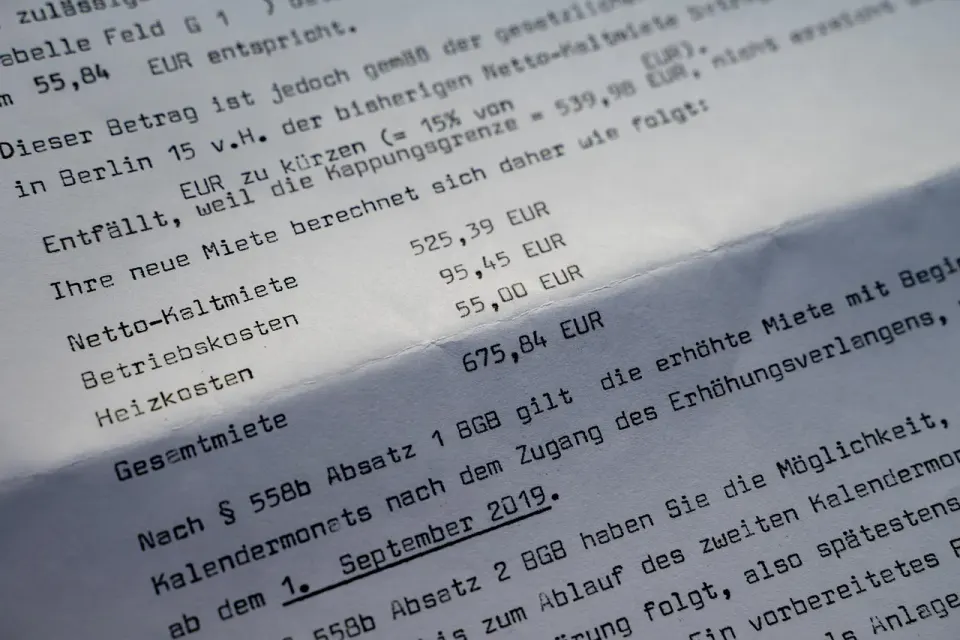
- The right form. The landlord must use the official Notice of Rent Increase form from the RTB.
- The amount. The increase cannot be more than 2.2% for 2027 unless you agreed in writing or the RTB approved more.
The three-full-months rule is where notices most often go wrong. Notice served partway through a month does not count that month. If your notice is late, the increase usually takes effect later than the date written on it, not on the landlord's preferred date.
What if your landlord asks for more than 2.2%?
A landlord can ask you to agree to a larger increase, but you do not have to. Any agreement must be in writing, and you should only sign if you understand exactly what you are agreeing to. A landlord can also apply to the RTB for an additional increase, but must prove specific grounds.
If you have already paid an increase that broke the rules, you may be able to get it back. BC tenants have recovered improper increases through the RTB, and in some cases by reducing future rent payments. Contact the RTB before doing that, so you follow the correct process and do not risk a notice for unpaid rent.
Keep paying on time while you sort it out. A late rent payment can turn a simple dispute into an eviction case, and missed bills can show up on your credit file. Our look at Equifax's Q2 2026 data on renters and missed payments shows how quickly that can happen.
Fixed-term leases and the cap
The 2.2% limit applies to fixed-term leases as well as month-to-month tenancies. A one-year lease does not let a landlord reset the rent to any figure at renewal with the same tenant. Since late 2017, BC has also restricted vacate clauses that once forced tenants out at the end of a term.
In practice, this means a sitting tenant who renews a lease keeps the protection of the cap. If a landlord presents a new lease at a much higher rent, ask whether it is a rent increase in disguise. The same notice rules and the same 2.2% limit should apply.
Keep a simple rent file
Disputes are easier to win with paper. Keep one folder, on paper or on your phone, with your lease, every rent increase notice and proof of each rent payment. Bank records of e-transfers or pre-authorized payments work well.
Add the date you received each notice and how it arrived, whether by hand, mail or email. Those dates decide whether the three full months of notice were given, and memories fade quickly a year later.
Is 2.2% the whole story on BC rents?
No. The cap only limits increases for sitting tenants. When a tenant moves out, the landlord can set any rent for the next tenant. That is why long-term BC tenants often pay far below the asking rent for the same unit.
Asking rents have been easing. The BC government says average rents fell 4.5% over the past year. The Canada Mortgage and Housing Corporation (CMHC) says in its 2026 mid-year rental market update that vacancies are highest in newer buildings. Older buildings and family-sized units remain tighter.
At realmilitaryflix, we would read that as a reason to stay put for most tenants paying below market. A 2.2% increase on a long-held lease is often still cheaper than a new lease at today's asking rent, even with softer prices.
BC programs that help renters pay rent
The rent cap limits how fast rent rises. Several BC programs help with rent itself, and many eligible renters never apply.
These are the main programs, based on the BC government's list:
- Renter's tax credit. Up to $400 a year for low and moderate income renters, claimed on your tax return.
- SAFER. Shelter Aid for Elderly Renters pays monthly rent help to eligible renters aged 60 and older.
- RAP. The Rental Assistance Program helps eligible low-income working families with rent.
- Rent bank. Interest-free loans for tenants facing urgent financial hardship, available across the province.

The province enhanced SAFER and RAP in 2026 to reach more seniors and families. If you applied in past years and were turned down, it may be worth checking again.
A note on the October 24 election
British Columbia votes on October 24, 2026. The 2.2% limit for 2027 is already set, so the election will not change increases taking effect in January. Housing policy for later years could change, though, as could other cost-of-living measures such as the paused PST on professional services, which would have reached property management fees.
The bottom line for BC tenants
For most BC rentals, the most your rent can rise in 2027 is 2.2%. Check that 12 months have passed, that you got three full months' notice on the official form, and that the math is right. If you are a senior or a low-income family, check whether SAFER, RAP or the renter's tax credit applies to you.
Your next step is to find your last increase notice and your current rent. Multiply the rent by 0.022 and compare it with any notice you receive. If something does not match, ask your landlord in writing and contact the RTB before you pay.
Reviewed by the realmilitaryflix editors against the Government of British Columbia's August 2026 release, October 2026. This is general information, not legal advice.
How much can a landlord raise rent in BC in 2027?
How much notice does a BC landlord need to give for a rent increase?
Does the BC rent cap apply to co-op housing?
What help is available for BC renters who are struggling with rent?
End of the story · 7 min
WAbout the writer
Camille Bouchard
Rent and budgeting editor
Camille has rented in Montréal, Ottawa and Halifax and has tracked every dollar of rent she has paid since her first lease. She writes practical budgeting guides for renters, built on the numbers rather than the guilt, and covers the tenancy rules that decide what a renter actually pays. She reads the provincial tenancy board decisions so readers do not have to, and she always names the province, because a rule that holds in Ontario can be wrong in Quebec.
6 more stories


✉The Friday Money Note
One money move,
every Friday.
One thing to do about your rent, credit or cards this week, and why. No ads, no noise.
Free. Unsubscribe in one click.